UV protection is the primary reason most hikers cite for wearing sunglasses. It is a good reason. But wind is a secondary factor that affects eye health and comfort on trail in ways that UV-focused advice rarely addresses.
What wind does to the eye surface
The eye surface is protected by a tear film — a thin, layered coating that lubricates the surface, maintains optical clarity, and protects against particulates and microorganisms. This film is continuously replenished by blinking and secretion from the lacrimal system.
Wind accelerates evaporation of the tear film. In dry or windy conditions, the film evaporates faster than it is replenished. The result is dry eye: a scratchy, gritty sensation, increased light sensitivity, and in sustained conditions, visual disturbances from an irregular surface.
On a long trail day in exposed, windy terrain, this is a real factor. It is not as dramatic as UV damage and it resolves with rest and moisture, but it compounds with fatigue to make the end of a long day harder than it needs to be.
Particulate exposure
Wind also carries particulates. On unpaved trails, wind picks up fine dust and grit. In desert environments, sand is a significant factor. Near coastal trails, salt spray. These particulates are irritants on the eye surface and can cause abrasion if present in sufficient concentration.
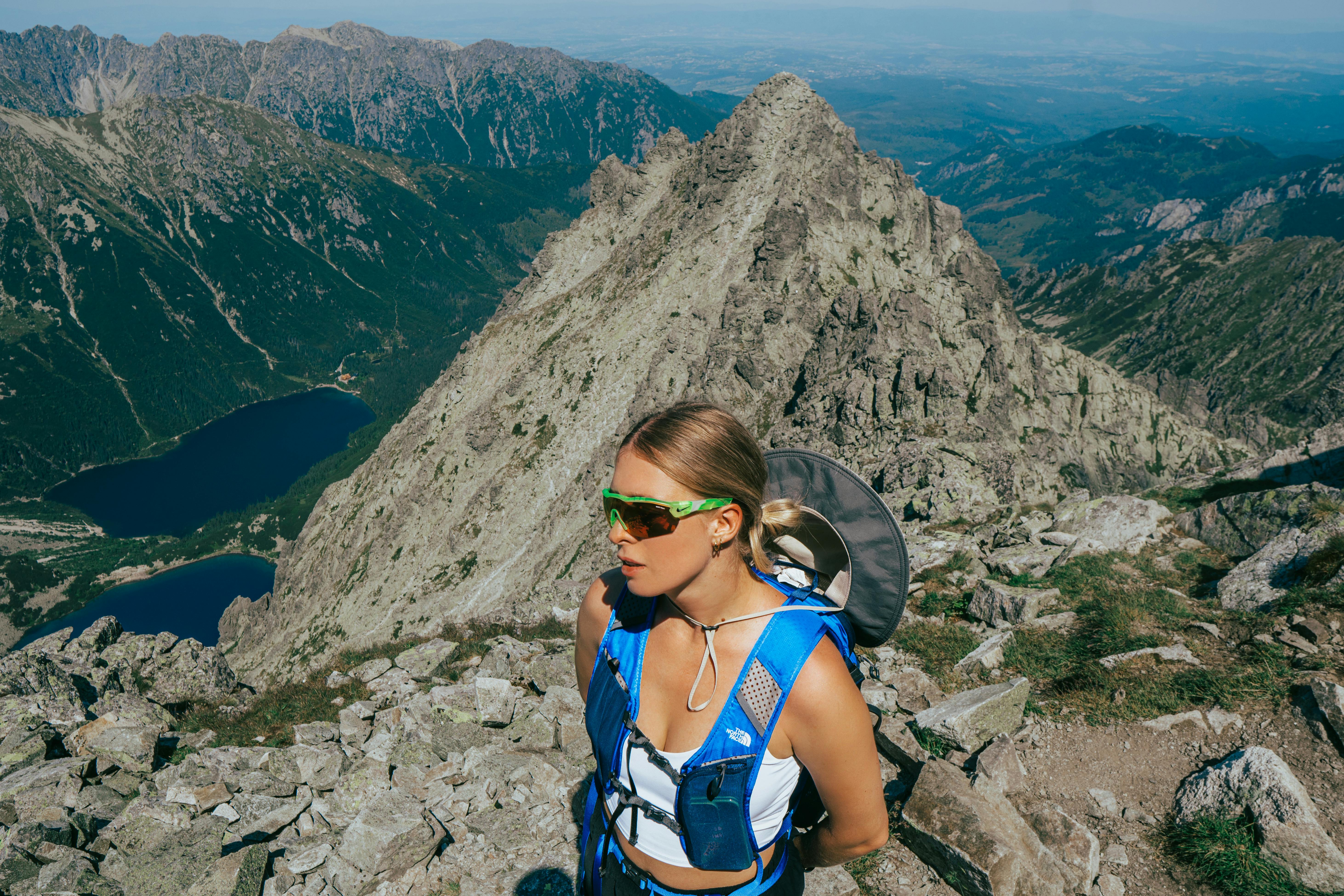
Standard sunglasses with lenses that sit near the face provide meaningful particulate protection. Wraparound frames or frames with foam gaskets provide more. The difference is not relevant on most trail days. On windy desert crossings, exposed ridgelines, or coastal routes with spray exposure, closer coverage earns its place.
Tear film evaporation and contact lens wearers
Contact lens wearers experience the wind-tear film problem more acutely than non-wearers. Contact lenses depend on the tear film for lubrication and optical function. Conditions that accelerate evaporation cause contacts to dry out and shift, which affects vision and increases discomfort.
Contact wearers hiking in exposed, windy conditions should prioritize close-fitting frame coverage more than non-wearers, and carry rewetting drops as a standard kit item alongside sunscreen.
The frame geometry solution
The practical response to wind exposure is frame coverage geometry — specifically, frames that sit close to the face and cover the eye from multiple angles.
Standard frames with a gap between the lens edge and the face allow airflow directly across the eye surface. This is fine in moderate conditions. In sustained wind, the airflow becomes a factor.
Close-fitting frames — either wraparound designs or frames with a curved lens that sits near the face — reduce this airflow significantly. They are not hermetically sealed, but they reduce the volume of air moving across the eye surface enough to meaningfully slow tear film evaporation.
Practical recommendations
For most trail use: any well-fitting sunglass with UV400 certification is adequate. Pay attention to how the frames sit on your face — frames that float away from the face provide less wind protection than frames that sit closer.
For exposed ridgeline hiking, desert conditions, or any situation involving sustained wind: closer-fitting coverage is worth prioritizing when selecting a frame. Foam gasket shields are available for severe conditions.
For contact lens wearers in any windy outdoor conditions: carry rewetting drops and prioritize close-fitting frames.
Wind is rarely the primary consideration in eyewear selection. On the right terrain, it is more important than most hikers account for.