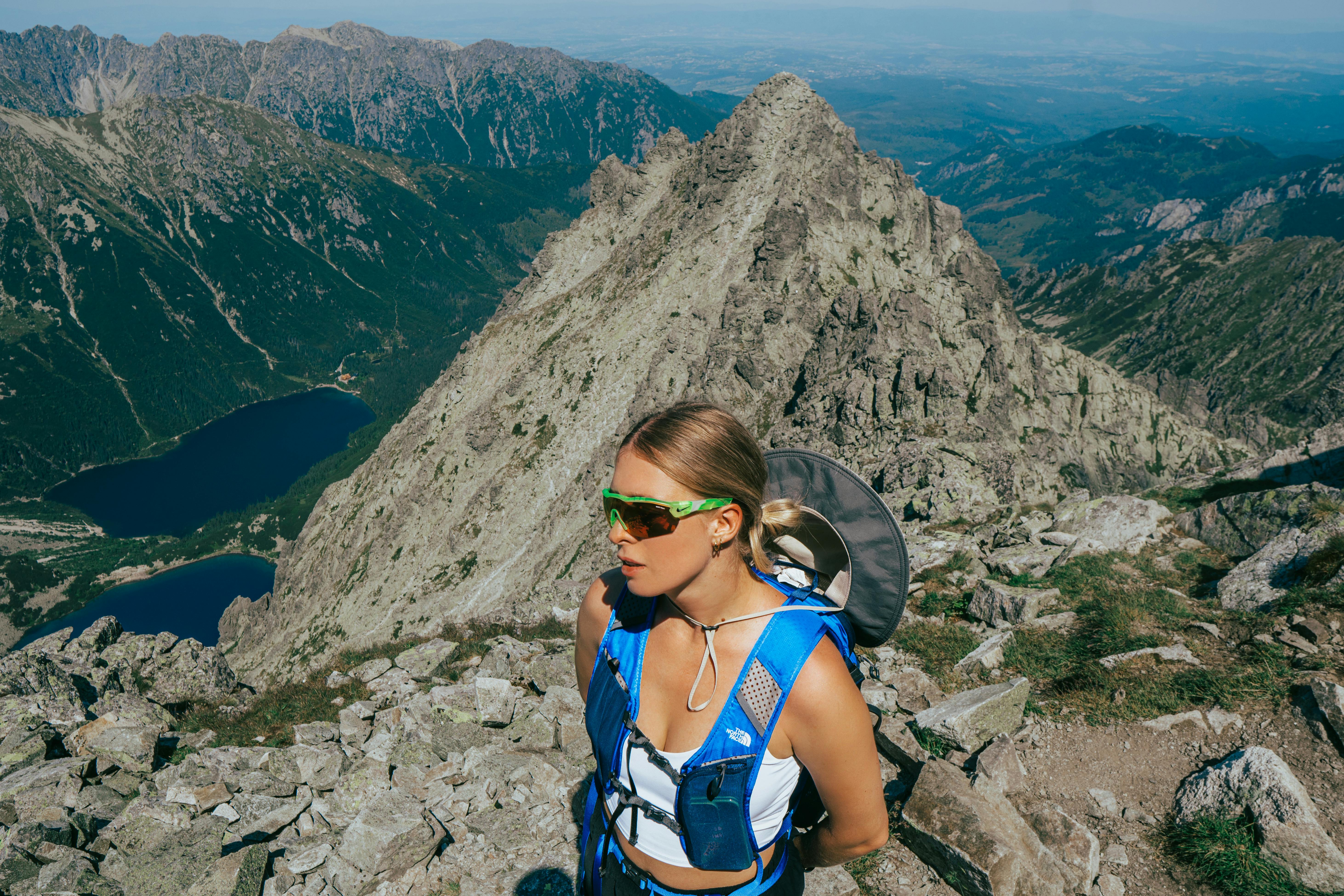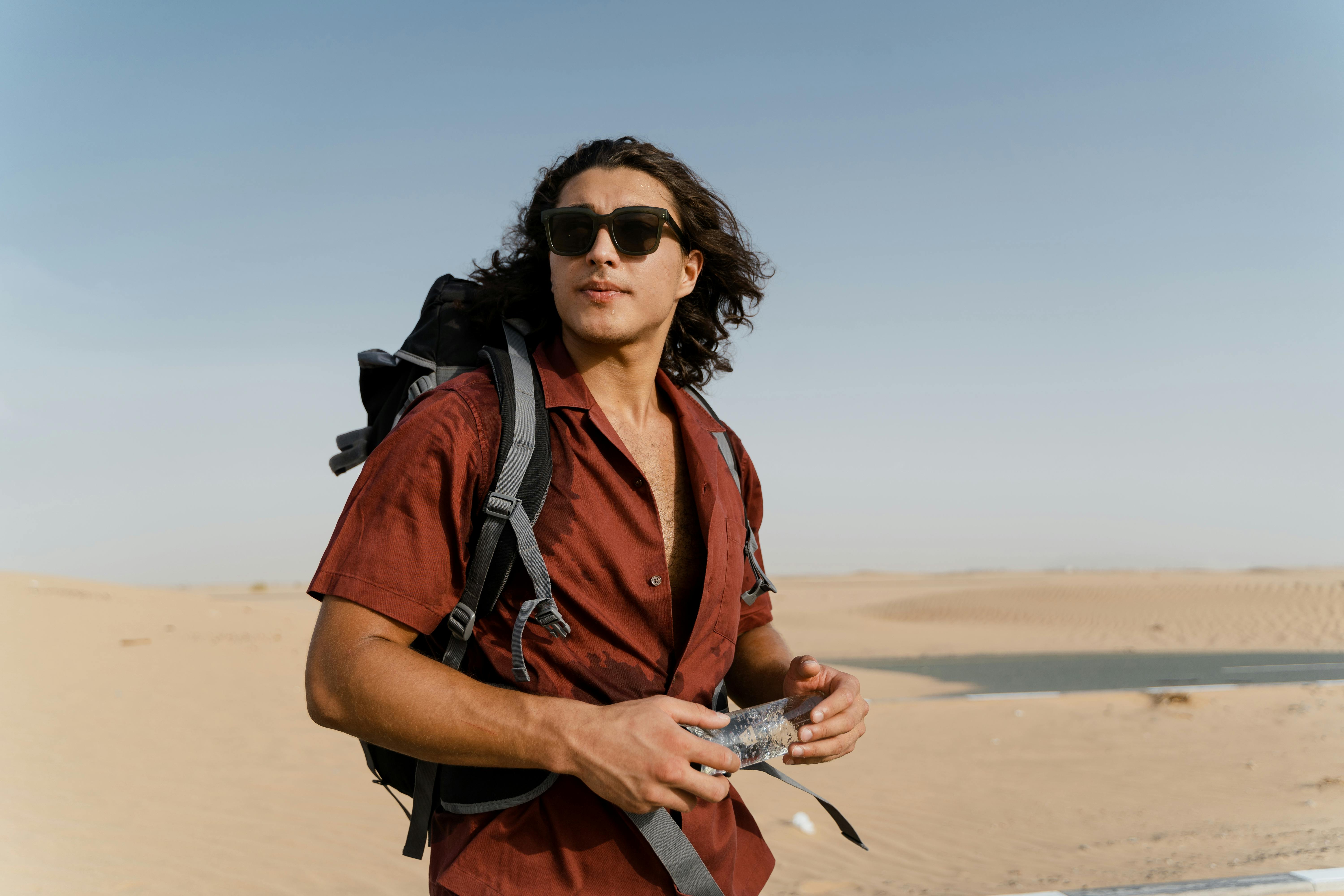
Desert hiking places specific demands on eye protection that general trail guidance does not fully address. The combination of high UV intensity, reflective surfaces, particulate exposure, and dry conditions creates a protection challenge that is more demanding than temperate trail hiking in several respects.
UV intensity in desert environments
Desert environments concentrate several UV-amplifying factors simultaneously.
Elevation: Many desert hiking areas — the Colorado Plateau, the Atacama, the deserts of Central Asia — sit at significant elevation. Elevation reduces atmospheric UV attenuation, increasing surface UV intensity.
Albedo: Sandy and rocky desert surfaces reflect substantially more UV radiation than vegetation-covered ground. Light sand reflects 15 to 25 percent of UV radiation. Pale limestone and sandstone reflect more. In a desert canyon or on an open sandy flat, UV is arriving from the ground and side walls as well as overhead.
Latitude and season: Deserts are disproportionately concentrated in lower latitudes where solar angles are higher. Combined with the typical summer hiking season, desert UV intensity at midday routinely exceeds what temperate hikers are accustomed to.
No cloud cover: Cloud cover attenuates UV significantly. Thin cloud cover reduces UV by 10 to 30 percent; thick cloud cover by up to 70 percent. Desert days are frequently cloudless. The UV mitigation that temperate hikers implicitly rely on — partial cloud cover reducing peak intensity — is absent for much of a desert day.
The particulate factor
Desert wind carries fine mineral particles — silica, gypsum, calcium carbonate depending on the desert geology — that are abrasive at the ocular surface. A sand or dust storm produces particulate concentrations that can cause significant irritation and abrasion without eye protection.
Even on calm days, fine desert dust is present in the air and can cause cumulative irritation over a long hiking day, particularly in windy conditions or while traveling through sandy terrain.
The protection response is frame coverage geometry. A frame that sits close to the face, with lenses that extend past the orbital area, creates a barrier against wind-carried particulates. Gasket-sealed frames provide the most complete protection but are heavy and hot in desert conditions. A close-fitting standard frame provides meaningful particulate reduction without the heat penalty.
Dry eye in desert conditions
Desert air is dry, and hiking effort generates heat and wind across the face. The combination accelerates tear film evaporation significantly. Extended desert hiking days, particularly on exposed terrain, frequently produce dry eye symptoms by mid-afternoon even in hikers who do not normally experience dry eye.
Carry lubricating eye drops (preservative-free saline is ideal) and use them proactively on long desert days — not just when your eyes feel uncomfortable, but at regular intervals. The discomfort signal lags behind the actual drying.
Contact lens wearers should be particularly attentive to this. Desert conditions dry contact lenses significantly faster than temperate environments, affecting both comfort and visual acuity.
Practical protection checklist for desert hiking
Lens darkness: Category 3 (VLT 8 to 18 percent) for full desert sun. Category 4 is appropriate for extreme conditions (high-elevation desert, snow-covered desert terrain) but may be uncomfortably dark in canyon shade.
Lens tint: Gray for accurate color rendering in reading terrain. Amber for contrast enhancement in canyon environments where the shade-sun contrast is high.
Coverage: Close-fitting frame. Side coverage is more important in desert environments than in most temperate trail contexts due to low-angle reflected UV from sand surfaces and canyon walls.
Wind protection: Same coverage logic as for exposed ridgeline hiking but amplified in sandy conditions.
Lubricating drops: Carry them. Use them before you need them.
The desert is the environment where eye protection decisions translate most directly into daily comfort and long-term health. The difference between adequate and inadequate gear is more noticeable here than on most other terrain.