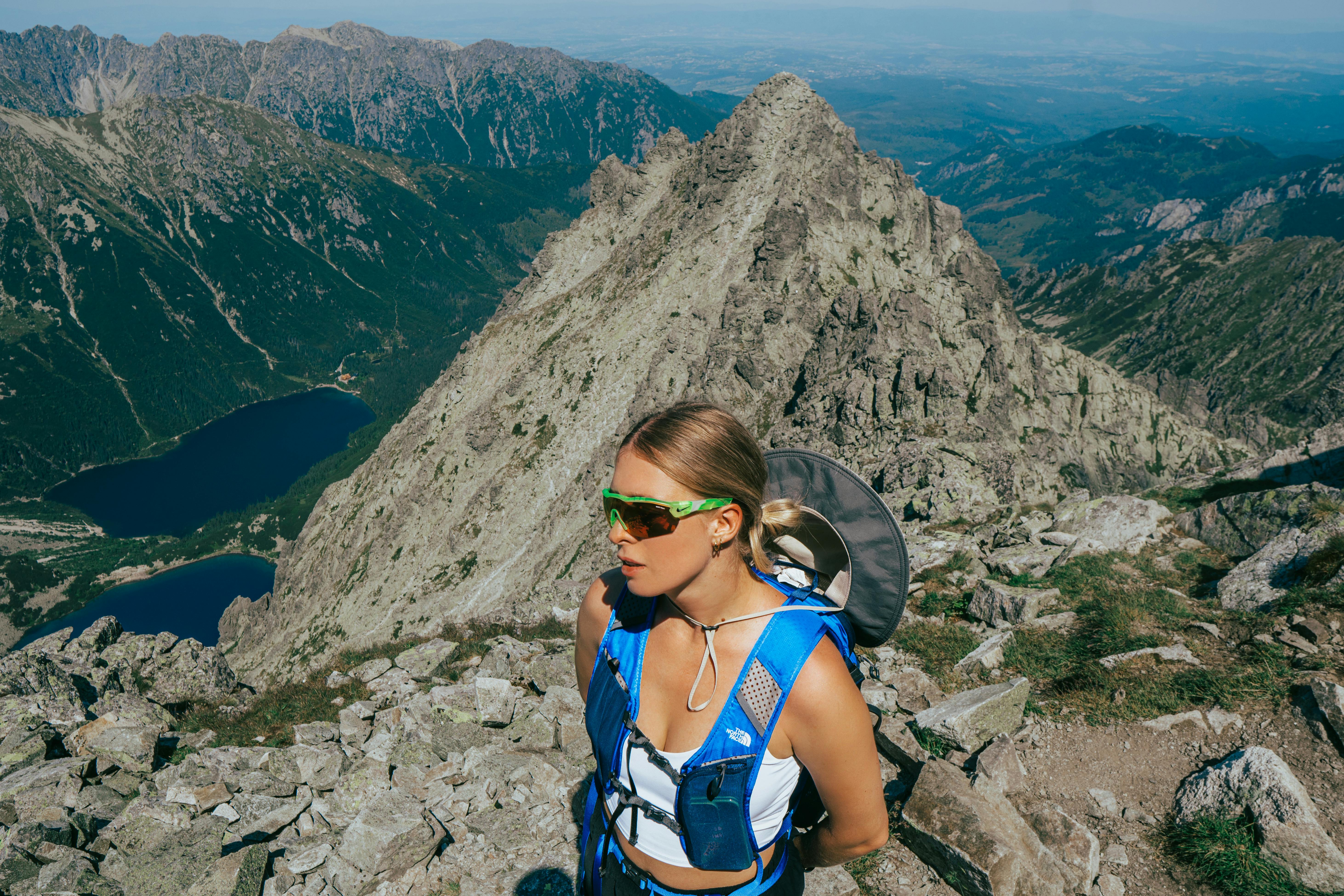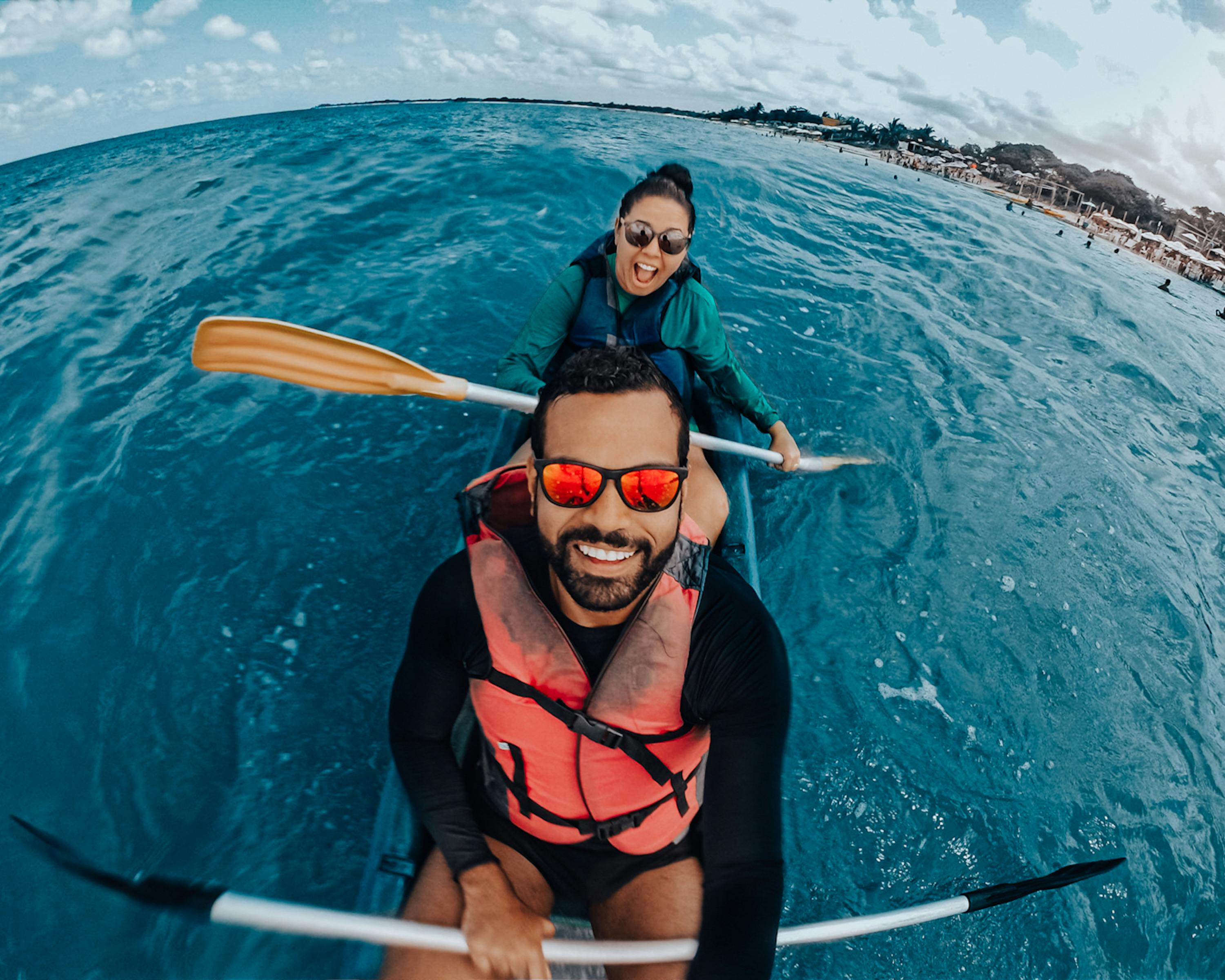
Paddling sports create a specific eye protection challenge: you are sitting at water level, surrounded by a highly reflective surface, in sustained direct sun exposure. Add the practical reality that your eyewear will occasionally end up in the water, and the requirements become clear.
The UV reflection problem
Water reflects UV radiation at a level determined by sun angle and surface conditions. At low sun angles — early morning, late afternoon — water reflects more UV than at high angles. On a calm day with the sun at moderate elevation, water reflects approximately 10 to 20 percent of UV radiation back toward the paddler.
This means UV exposure during paddling comes from two directions simultaneously: direct overhead exposure and upward-reflected exposure from the water surface. Standard sunglasses with lenses that cover the eye from above do not fully address reflected UV arriving from below the lens edge.
For extended paddling sessions in full sun, this bidirectional exposure accumulates. Close-fitting frames that minimize the gap between the lens edge and the face reduce this reflected exposure.
Why polarization is genuinely worth it here
Polarization is correctly recommended for most water sports, and kayaking is the clearest case for the recommendation.
The glare from calm water surfaces in direct sun is intensely polarized horizontally. Non-polarized sunglasses block UV radiation but do not reduce this glare — your eyes are receiving the full visual intensity of reflected sunlight for the duration of the paddle. Over a half-day or full-day paddle, this produces significant visual fatigue regardless of lens darkness.
A polarized lens eliminates the horizontally reflected glare component. This is not a subtle improvement. The visual difference between a polarized and non-polarized lens on calm water in full sun is immediate and substantial. Visual fatigue at the end of a day on the water is measurably less.
The submersion problem
Most paddlers will eventually capsize. Even careful paddlers in stable sit-on-top kayaks will encounter conditions — wakes, wind chop, surf entry — where submersion becomes possible. This practical reality has specific implications for eyewear selection.
Floating frames: Some eyewear is made with materials that provide buoyancy. These are worth seeking out for paddling use. A standard pair of sunglasses that sinks immediately is a financial loss at minimum; in fast-moving water, it is simply gone.
Retention straps: A floating retention strap keeps non-floating frames on or near your body during a capsize. Neoprene straps float and maintain tension without the rigidity of a standard strap. This is the most practical solution for most paddlers.
Frames you are willing to lose: The secondary consideration is simply whether you are wearing eyewear that is irreplaceable or expensive enough that losing it significantly affects you. An investment pair of prescription sunglasses in a capsize situation creates anxiety that affects decision-making. A more modest pair with a retention strap reduces stakes appropriately.
Independent eyewear labels at accessible price points — frames in the $65 to $80 range from brands like VEIL Collectives — are increasingly viable as dedicated paddling pairs: real UV protection, real design quality, at a price point where adding a retention strap and accepting the occasional submersion risk is rational rather than distressing.
Lens tint for paddling
Gray: Neutral, accurate. Best in full sun on calm water where you primarily need glare reduction.
Amber/brown: Contrast enhancement. Useful on overcast days or in conditions with variable cloud cover where the sky provides less natural brightness separation between water and sky.
Yellow: Dawn and dusk paddling, overcast days, heavily shaded rivers. Enhances contrast in flat light.
For most paddling in daylight conditions: gray polarized. It handles the widest range of water conditions accurately.
The practical kit
Polarized lens in gray or amber, UV400, close-fitting frame, floating retention strap or floating frame. This covers the core requirements for paddling eye protection without overcomplication. Everything else is optimization.