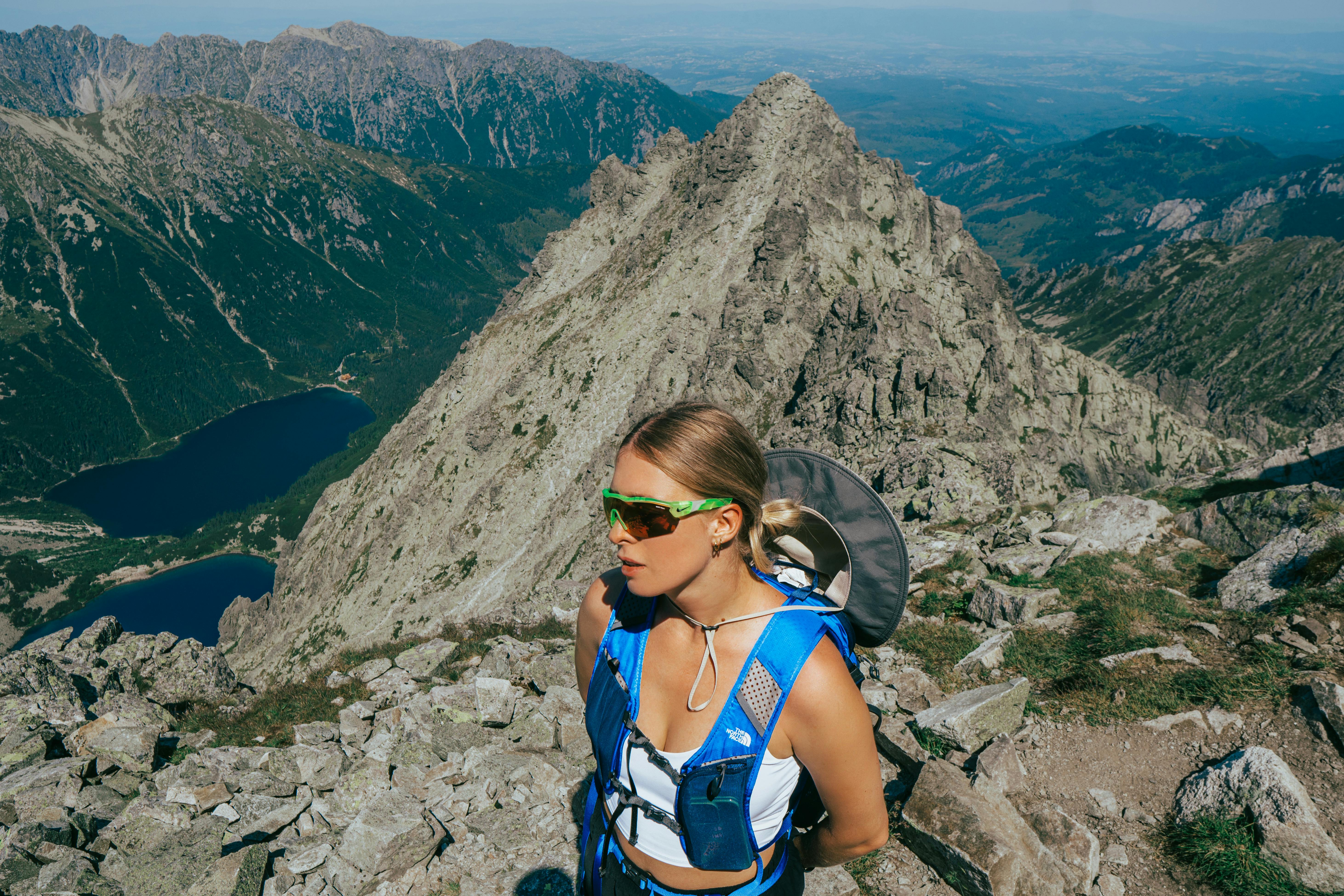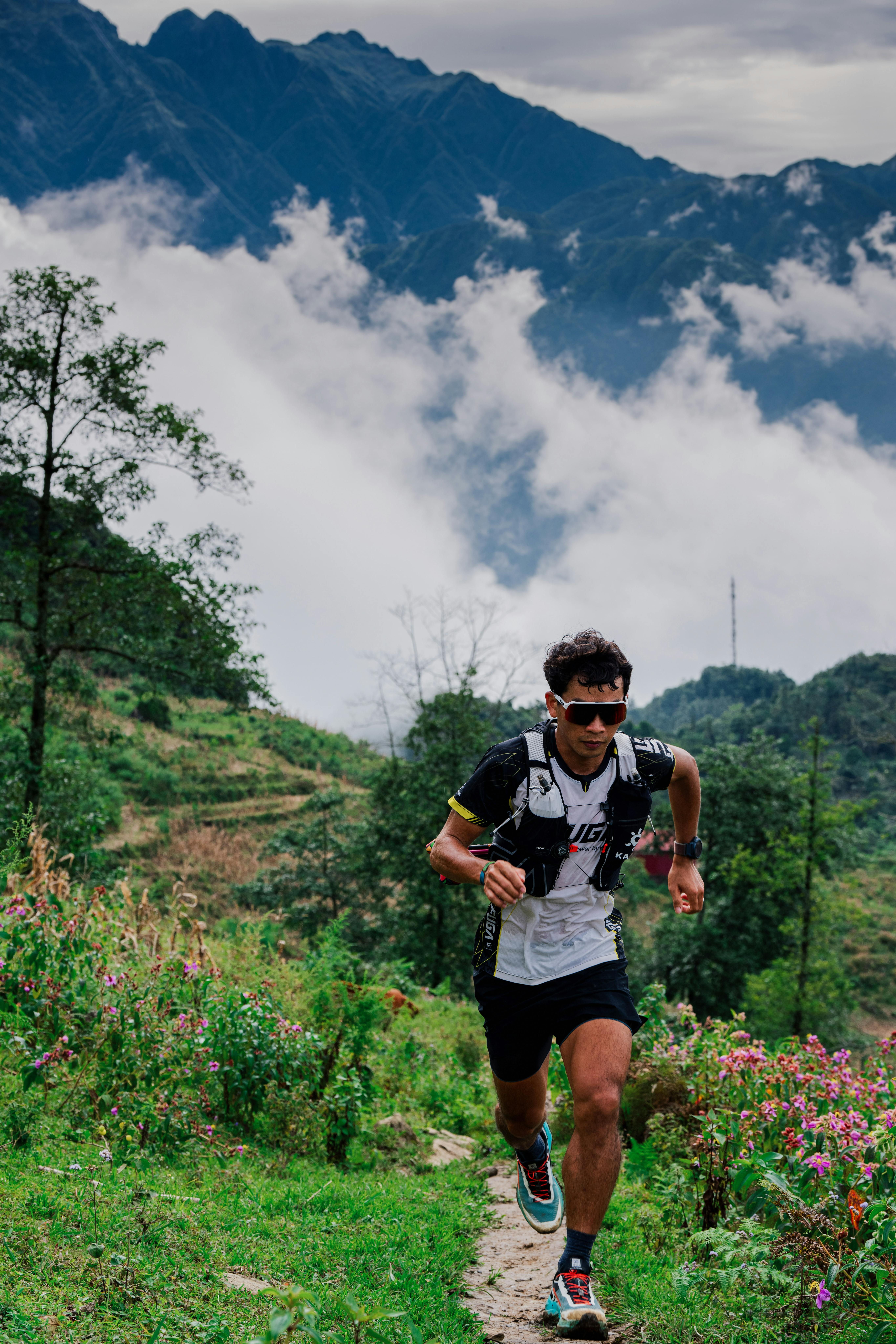
Trail running shares some eyewear requirements with road running and some with hiking. The specific combination — sustained aerobic effort, variable terrain, speed changes, elevation, and frequent transitions between sun and shade — creates a set of requirements that is more demanding than either activity alone.
The non-negotiables
Secure retention: This is the primary functional requirement that separates trail running eyewear from general sport or fashion frames. At running pace over technical terrain, frames that slide on sweat, bounce with foot strike, or shift when you look down at your footing are not usable. They become a distraction and a hazard.
Rubber nose pads and rubber temple tips are the standard solution. They grip moisture-dampened skin in a way that smooth plastic does not. If a frame does not have these features, it will likely not stay in place for more than 30 to 60 minutes of sustained effort.
Weight: Every gram on your face becomes more noticeable over a long run. Frames that weigh under 30 grams are standard for running-specific eyewear. Heavier frames — particularly heavy acetate fashion frames — create pressure points and sliding that compounds with time and sweat.
Impact resistance: Trail running involves falls. Frames and lenses that cannot survive contact with the ground are a liability. Polycarbonate or TR90 (a thermoplastic nylon) frames with polycarbonate or Trivex lenses are the standard materials for sport eyewear. Both are substantially more impact-resistant than standard acetate or glass.
The trail-specific requirements
Coverage for variable conditions: Trail running frequently involves transitions between exposed ridgelines in direct sun and shaded forest sections. A lens that is optimized for full sun will be uncomfortably dark in deep shade. A lens optimized for shade is inadequate on exposed terrain.
Solutions: photochromic lenses that adjust automatically (useful but with response lag), interchangeable lenses in different tints (higher cost, adds logistics), or a mid-tint lens that handles a reasonable range of conditions acceptably. For most trail runners, the mid-tint solution — a lens at VLT 20 to 35 percent — is the most practical.
Ventilation: Sustained aerobic effort generates heat and moisture. Lenses that fog in these conditions impair vision at exactly the moments — technical descents, creek crossings, fast sections — where vision quality matters most. Lens ventilation — either through frame vents or lens geometry that allows airflow — is worth prioritizing for running.
Peripheral clarity: Trail running requires awareness of peripheral terrain — roots, rocks, drop-offs at the trail edge. Lenses with minimal distortion in the peripheral zone are more valuable for trail running than for activities where you are primarily looking straight ahead.
What you do not need
Aerodynamic frame profiles matter at cycling speeds. At running speeds, they are marketing.
Maximum lens coverage matters for cycling and Alpine environments. For trail running, a frame that covers the eye adequately without extending significantly past the orbital area is lighter and more comfortable for sustained wear.
Polarized lenses are useful for water-adjacent running and high-UV conditions but are not a priority feature for most trail running. The contrast enhancement of a good tinted lens often serves trail runners better than polarization.
Price calibration
Adequate trail running eyewear does not require the $150 to $250 price point that specialist brands occupy. The functional requirements — lightweight, rubber grips, polycarbonate lens, adequate coverage — are met by numerous options in the $50 to $90 range.
The premium at the top of the market buys weight reduction (meaningful for competitive runners), optical quality improvements (meaningful, but marginal for most users), and brand association. These are legitimate reasons to spend more. They are not reasons to avoid the category if the premium is outside your budget.
Get the functional requirements right. The rest is optimization.